
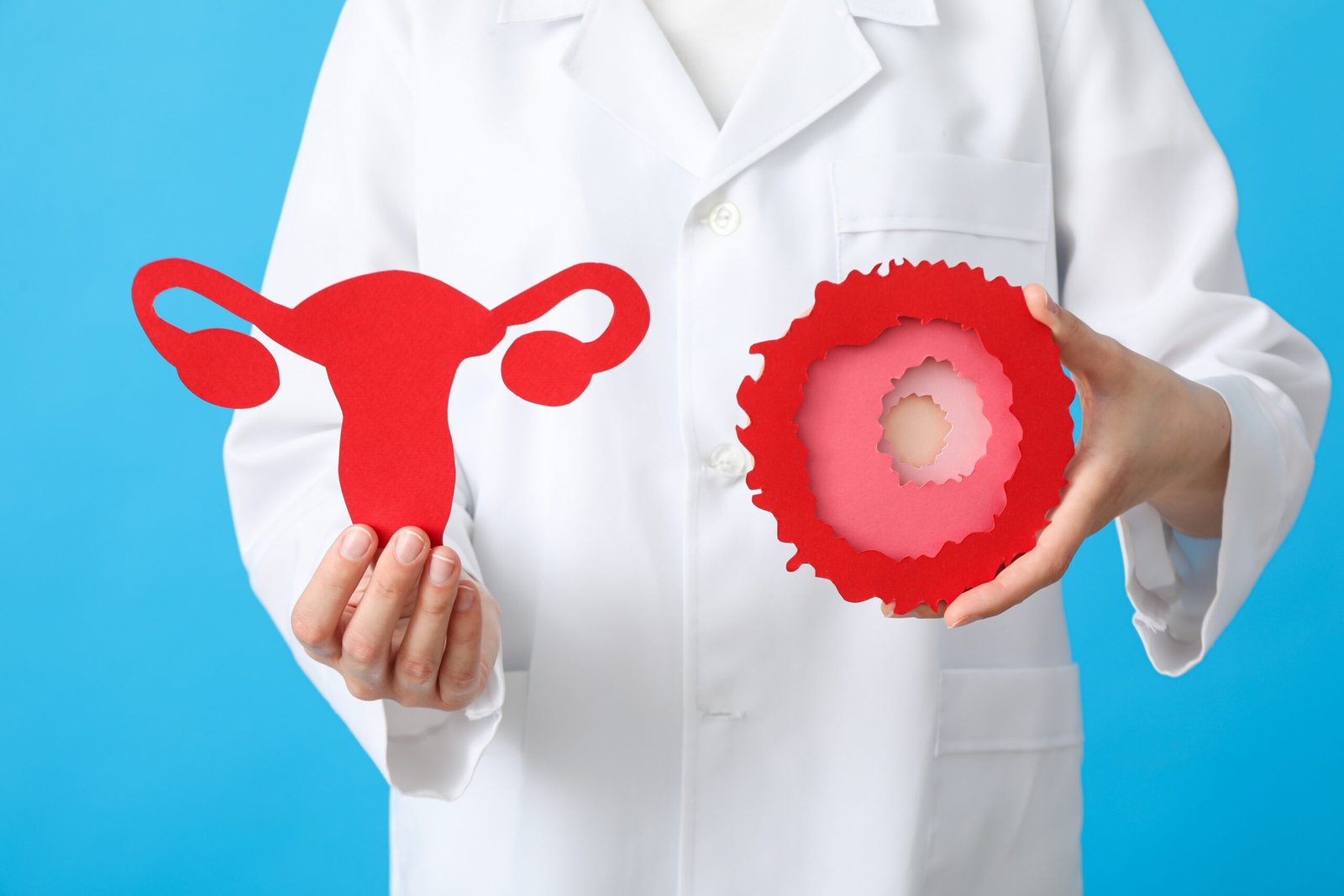
The main difference between a cyst and a fibroid is where they develop and what they are made of.
An ovarian cyst develops in or on an ovary. It is usually a sac or pouch that may contain fluid or other material.
A fibroid develops from the muscular tissue of the uterus. Fibroids are benign growths and can vary greatly in size and location.
Both cysts and fibroids can occur during the reproductive years. Both may sometimes cause pelvic pain, pressure, menstrual changes or fertility concerns. However, many women have cysts or fibroids without experiencing any symptoms.
Patients often confuse the two because both may be found during a pelvic ultrasound and may be described as a “mass” or “growth.” But they are not the same condition.
In this guide, we explain the difference between cyst and fibroid, where they develop, their symptoms, ultrasound appearance, size, possible effect on fertility, treatment options and when medical evaluation may be needed.
What Is the Difference Between a Cyst and a Fibroid?
The simplest way to understand the difference is:
A cyst usually develops in or on an ovary, while a fibroid develops from the muscle of the uterus.
| Feature | Ovarian Cyst | Fibroid |
|---|---|---|
| Where it develops | Ovary | Uterus |
| What it is | A sac or pouch containing fluid or other material | A benign growth arising from uterine muscle |
| Usually benign? | Most are benign | Fibroids are benign growths |
| Common symptoms | Pelvic pain, bloating, menstrual changes | Heavy periods, pelvic pressure, pain |
| Can affect fertility? | Sometimes, depending on the type and underlying condition | Sometimes, depending particularly on location and other factors |
| Can disappear on its own? | Many functional cysts can | Some fibroids may shrink, particularly around menopause |
| Common test | Pelvic ultrasound | Pelvic ultrasound |
| Treatment | Observation, selected medicines or surgery | Monitoring, medicines, procedures or surgery depending on symptoms and individual goals |
An ovarian cyst and a uterine fibroid are therefore different findings, even if they are the same size. For example, a 50 mm (5 cm) ovarian cyst and a 50 mm (5 cm) uterine fibroid do not represent the same condition or necessarily require the same treatment.
Key takeaway
Cyst = usually develops in or on the ovary.
Fibroid = develops from the muscle of the uterus.
This distinction is important because the location, type, appearance and symptoms help a gynecologist determine what the finding means and whether any treatment is needed.
What Is an Ovarian Cyst?
An ovarian cyst is a sac or pouch that forms in or on an ovary.
It may contain fluid or other material, depending on the type of cyst.
Ovarian cysts are common, and many are benign. Some, particularly functional cysts, may disappear without treatment.
Whether a cyst needs monitoring or treatment depends on factors such as its type, appearance, size, symptoms, age and other clinical findings.
Common Types of Ovarian Cysts
Functional cyst: These are related to the normal menstrual cycle and are common during the reproductive years. Many resolve on their own.
Hemorrhagic cyst: This occurs when bleeding develops within a cyst. It may cause pelvic pain and may require follow-up depending on its appearance and symptoms.
Endometrioma: This is associated with endometriosis and can contain old blood.
Dermoid cyst: Also called a mature cystic teratoma, this type can contain different types of tissue.
Cystadenoma: These cysts develop from ovarian tissue and may become large.
Not every ovarian cyst behaves in the same way, which is why the ultrasound description and clinical context are important.
What Is a Fibroid?
A fibroid is a benign growth that develops from the muscular tissue of the uterus.
The medical terms uterine fibroid, leiomyoma and myoma are commonly used for the same condition.
Fibroids may be located inside the uterine cavity, within the muscular wall of the uterus or on its outer surface.
A woman may have one fibroid or several fibroids, and their size can range from very small to very large.
The symptoms caused by a fibroid depend not only on its size but also on where it is located.
Types of Fibroids
Submucosal fibroid: Grows toward the inside of the uterine cavity. Even a relatively small fibroid in this location may cause heavy menstrual bleeding.
Intramural fibroid: Develops within the muscular wall of the uterus.
Subserosal fibroid: Grows toward the outer surface of the uterus and may cause pressure symptoms as it becomes larger.
Pedunculated fibroid: Attached to the uterus by a stalk.
Understanding the location helps explain why two women with fibroids of similar size can have very different symptoms.
For a detailed discussion of fibroid size, see our guide: Which Size of Fibroid Is Dangerous?
Cyst vs Fibroid: Where Do They Develop?
The easiest way to understand the difference between a cyst and a fibroid is to look at where the growth develops.
Ovarian Cyst
→ Develops in or on the ovary.
The cyst may be located within the ovary or arise from its surface.
Uterine Fibroid
→ Develops from the muscle of the uterus.
It may grow toward the uterine cavity, within the uterine wall or toward the outside of the uterus.
What Is the Difference Between Cyst and Fibroid Symptoms?
There can be some overlap between the symptoms of an ovarian cyst and a uterine fibroid.
For example, both may cause pelvic pain, pressure or changes in menstrual symptoms.
This is why symptoms alone cannot always tell you whether you have a cyst or a fibroid. The location and appearance of the finding on an ultrasound are also important.
Ovarian Cyst Symptoms
Many ovarian cysts cause no symptoms at all.
When symptoms occur, they may include:
- Pelvic pain
- Pain on one side of the lower abdomen
- Bloating
- Feeling full quickly
- Pain during sex
- Changes in menstrual periods
- Frequent urination
- Difficulty passing stool
Symptoms can vary depending on the size, type and location of the cyst.
Sudden severe pelvic pain, particularly with nausea or vomiting, needs prompt medical evaluation because complications such as ovarian torsion or cyst rupture can sometimes occur.
Fibroid Symptoms
Fibroids may also cause no symptoms.
When symptoms occur, they may include:
- Heavy menstrual bleeding
- Longer or painful periods
- Pelvic pressure
- Abdominal enlargement
- Frequent urination
- Constipation or difficulty passing stool
- Lower back pain
- Pain during sex
- Fertility or pregnancy concerns
The symptoms of a fibroid depend strongly on its size and location. For example, a fibroid growing toward the uterine cavity may cause heavy bleeding even when it is relatively small.
Important takeaway
Symptoms alone cannot reliably tell whether you have a cyst or a fibroid.
If an ultrasound has identified a cyst or fibroid, the complete report should be reviewed with a gynecologist rather than trying to determine its significance from symptoms alone.
Cyst vs Fibroid: Which Is More Dangerous?
Neither is automatically more dangerous.
Most ovarian cysts are benign, and uterine fibroids are also benign growths.
However, the potential significance of either finding depends on several factors, including:
- Type
- Size
- Location
- Ultrasound appearance
- Symptoms
- Age and menopausal status
- Whether the finding changes over time
- Other clinical findings
A small ovarian cyst can sometimes cause an urgent problem if it leads to complications such as ovarian torsion or rupture.
A large fibroid may cause significant bleeding, pelvic pressure, bladder or bowel symptoms, or other problems depending on where it grows.
Therefore: A cyst is not automatically more dangerous than a fibroid, and a fibroid is not automatically more dangerous than a cyst.
The important question is not simply “Which one is more dangerous?” but “What type of cyst or fibroid is it, where is it located, and what is it doing?”
Size alone does not determine risk.
Can a Cyst or Fibroid Become Cancerous?
Most ovarian cysts and uterine fibroids are not cancer. However, they are different conditions and are evaluated differently when a doctor has concerns.
Can an Ovarian Cyst Be Cancerous?
Most ovarian cysts are benign.
However, some ovarian masses can be cancerous. This is why doctors do not assess an ovarian cyst based on size alone.
They may consider:
- Ultrasound appearance
- Whether the cyst is simple or complex
- Solid areas or other concerning features
- Age and menopausal status
- Symptoms
- Whether the finding changes over time
- Other clinical findings
Further testing may sometimes be recommended when an ovarian mass has concerning features.
So, finding an ovarian cyst does not mean you have ovarian cancer.
Can a Fibroid Be Cancerous?
Fibroids are benign growths of the uterus.
A fibroid does not simply “turn into cancer.”
However, if a uterine mass has an unusual appearance, changes in an unexpected way, or the diagnosis is uncertain, a doctor may recommend further evaluation.
Importantly: Fibroid size alone cannot diagnose cancer.
A large fibroid is not automatically cancerous, and a smaller uterine mass should not be judged by size alone either.
The correct approach is to evaluate the complete clinical and imaging picture.
How Are Cysts and Fibroids Diagnosed?
A doctor usually combines the patient’s symptoms, medical history, examination and imaging findings to determine whether a pelvic finding is an ovarian cyst, fibroid or another condition.
Pelvic Ultrasound
Ultrasound is one of the most commonly used tests for evaluating both ovarian cysts and uterine fibroids.
For an ovarian cyst, ultrasound can help identify:
- Which ovary the finding comes from
- Size
- Shape
- Whether it appears fluid-filled or solid
- Internal features
- Other characteristics that may help determine the type of cyst
For a fibroid, ultrasound can help identify:
- Size
- Number of fibroids
- Location
- Effect on the uterus
- Relationship to the uterine cavity
This is why the exact wording of an ultrasound report matters.
A measurement such as 50 mm (5 cm) tells you the size, but it does not by itself tell you whether the finding is a cyst, fibroid, or another type of mass.
MRI When Needed
MRI may be recommended when more detailed information is needed.
It can provide a clearer picture of the uterus, ovaries and surrounding structures and may help clarify the location or characteristics of a pelvic mass.
MRI is not necessary for every cyst or fibroid.
The decision depends on the ultrasound findings and the individual clinical situation.
Follow-Up Imaging
Sometimes the best approach is to repeat an ultrasound after a period of time.
This may help the doctor determine whether a finding:
- Has disappeared
- Has become smaller
- Has remained stable
- Has increased in size
- Has developed different features
The timing of follow-up depends on the type of finding, its appearance, symptoms and the patient’s age and clinical situation.
Cyst vs Fibroid on an Ultrasound Report: What Do the Words Mean?
If you have received an ultrasound report, some of the terminology can sound confusing.
The following explanations can help you understand the basic meaning of common terms.
“Simple Cyst”
A simple cyst usually describes a cyst that appears mainly fluid-filled on ultrasound, without obvious solid components.
Many simple ovarian cysts are benign, but the appropriate follow-up depends on factors such as age, size, symptoms and the overall ultrasound appearance.
“Complex Cyst”
A complex cyst means the ultrasound shows features beyond a simple fluid-filled appearance.
It may contain internal material, septations, solid-appearing areas or other features that require closer interpretation.
A complex cyst does not automatically mean cancer.
It means the finding needs to be assessed in its clinical context.
“Solid Lesion”
A solid lesion means the ultrasound appearance is not simply that of a fluid-filled cyst.
The significance depends on where the lesion is located and what other characteristics are seen.
A doctor may recommend additional imaging or other evaluation when appropriate.
“Intramural Fibroid”
An intramural fibroid develops within the muscular wall of the uterus.
Its symptoms depend on its size and exact location.
“Submucosal Fibroid”
A submucosal fibroid grows toward the inside of the uterine cavity.
Even a relatively small submucosal fibroid can sometimes cause heavy menstrual bleeding because of its location.
“Subserosal Fibroid”
A subserosal fibroid grows toward the outer surface of the uterus.
When it becomes larger, it may cause pressure symptoms involving nearby organs.
“Adnexal Mass”
Adnexal mass is a general term for a mass or abnormal finding near the uterus, fallopian tubes or ovaries.
It is not a diagnosis of cancer.
An adnexal mass may have several possible causes, including an ovarian cyst or another benign condition. The ultrasound appearance, symptoms, age and other clinical findings help determine what evaluation is appropriate.
Which Is Bigger: A Cyst or a Fibroid?
There is no useful rule that says a cyst is always bigger than a fibroid, or vice versa.
Both ovarian cysts and uterine fibroids can range from very small findings to very large masses.
For example:
- Some ovarian cysts can become very large.
- Fibroids can also grow from a few millimetres to many centimetres.
- A large cyst is not automatically more dangerous than a smaller fibroid.
- A large fibroid is not automatically more serious than a smaller cyst.
The measurement should always be interpreted together with what the finding is, where it is located, how it looks on ultrasound and whether it is causing symptoms.
For example, if an ultrasound shows a 70 mm (7 cm) mass, the number alone cannot tell you whether it is a cyst, fibroid or another type of pelvic finding.
Do not assume that a 70 mm mass is a fibroid simply because it is large. The ultrasound description and location are important.
Can an Ovarian Cyst and Fibroid Occur Together?
Yes. A woman can have both an ovarian cyst and a uterine fibroid at the same time.
They are separate conditions.
An ovarian cyst develops in or on an ovary, while a fibroid develops from the muscle of the uterus.
A pelvic ultrasound may sometimes identify both findings during the same examination.
If this happens, each finding needs to be assessed separately.
For example, a report might show:
- 50 mm (5 cm) ovarian cyst
- 30 mm (3 cm) intramural fibroid
The two findings are not the same condition and do not necessarily require the same treatment.
The doctor will consider the type, size, location, ultrasound appearance and symptoms associated with each one.
Cyst vs Fibroid: Which Can Affect Fertility?
Both ovarian cysts and fibroids can sometimes be associated with fertility problems, but neither diagnosis automatically means that a woman will have difficulty becoming pregnant.
Ovarian Cyst and Fertility
Most ovarian cysts do not prevent pregnancy.
However, the underlying condition causing the cyst can sometimes be important.
For example, endometriomas associated with endometriosis may be linked with fertility problems.
The type and location of the cyst also matter when considering treatment.
If surgery is recommended for an ovarian cyst in someone who wants to become pregnant, the surgeon may consider how to treat the cyst while preserving healthy ovarian tissue when appropriate.
Fibroid and Fertility
Some fibroids can affect fertility.
Location is particularly important.
Fibroids that distort or grow toward the uterine cavity may be more clinically relevant for conception or pregnancy than fibroids that do not affect the cavity.
However, not every woman with a fibroid will have fertility problems.
Other factors can also affect fertility, so a fibroid should not automatically be assumed to be the cause.
If you are trying to conceive and have an ovarian cyst or fibroid, discuss the finding with a gynecologist before deciding on treatment.
How Are Ovarian Cysts Treated?
Treatment for an ovarian cyst depends on factors such as its type, size, ultrasound appearance, symptoms, age and whether it changes over time.
Observation
Many ovarian cysts can simply be monitored.
A doctor may recommend a follow-up ultrasound to see whether the cyst becomes smaller or disappears.
This is particularly relevant for cysts that have a benign appearance and are not causing significant symptoms.
Medication
Medication may be used in selected situations to manage symptoms or treat an underlying condition.
However, medicines do not remove every type of ovarian cyst.
The appropriate treatment depends on what is causing the cyst.
Ovarian Cystectomy
An ovarian cystectomy is a procedure to remove an ovarian cyst while aiming to preserve healthy ovarian tissue when appropriate.
For selected benign-appearing cysts, this may be performed using laparoscopic surgery, which uses small incisions and specialized instruments.
Whether laparoscopy is suitable depends on the individual case.
When More Extensive Surgery May Be Needed
In some situations, a different surgical approach may be necessary.
This decision can depend on:
- Cyst size
- Cyst characteristics
- Age
- Symptoms
- Menopausal status
- Whether the cyst persists or changes
- Whether there is concern about cancer
The goal is to choose the safest and most appropriate treatment rather than treating every ovarian cyst in the same way.
How Are Fibroids Treated?
Fibroid treatment depends on size, location, number, symptoms, age, fertility plans and the patient’s overall situation.
Monitoring
Fibroids that are not causing significant symptoms may not require immediate treatment.
A doctor may recommend observation and periodic assessment.
Medication
Medicines may help control symptoms such as heavy menstrual bleeding or pain in selected patients.
They may manage symptoms without necessarily removing the fibroid.
Myomectomy
A myomectomy removes fibroids while preserving the uterus.
Different surgical approaches may be considered depending on the fibroid’s size, number and location.
For women who want to preserve fertility, myomectomy may be an important treatment option in selected cases.
Uterine Artery Embolization
Uterine artery embolization (UAE) reduces the blood supply to the fibroids.
This can cause the fibroids to shrink and may improve symptoms such as heavy bleeding and pressure.
Radiofrequency Ablation
Radiofrequency ablation uses heat energy to destroy or shrink fibroid tissue.
It may be an option for selected patients depending on the size, number and location of the fibroids.
Hysterectomy
A hysterectomy removes the uterus and is a definitive treatment for fibroids.
Because the uterus is removed, pregnancy is no longer possible after the procedure.
The choice between monitoring, medication, minimally invasive procedures or surgery should be based on the woman’s symptoms, reproductive plans and individual clinical situation.
Cyst vs Fibroid: Which One Needs Surgery?
Neither an ovarian cyst nor a fibroid automatically means that surgery is required.
The decision depends on the characteristics of the condition and how it is affecting the patient.
Surgery for an Ovarian Cyst May Be Considered When:
- The cyst is very large.
- It causes significant or persistent symptoms.
- It persists or changes over time.
- Its ultrasound appearance is concerning.
- Ovarian torsion is suspected.
- Rupture causes significant complications.
- Cancer is suspected or cannot be adequately ruled out.
Surgery for a Fibroid May Be Considered When:
- Heavy menstrual bleeding is significant.
- Anemia develops because of bleeding.
- Pain or pressure is severe.
- Symptoms interfere with daily activities.
- Fertility concerns are present in selected cases.
- Fibroids are very large and symptomatic.
- Other appropriate treatments have not provided adequate relief.
The decision depends on the condition, not simply the word “cyst” or “fibroid.”
A gynecologist should review the complete ultrasound report and clinical picture before recommending treatment.
When Is a Cyst or Fibroid an Emergency?
Most cysts and fibroids do not cause an emergency.
However, some complications can produce sudden or severe symptoms that require urgent medical assessment.
Seek urgent medical attention for:
- Sudden severe pelvic or abdominal pain
- Severe pain with nausea or vomiting
- Fainting or severe dizziness
- Heavy vaginal bleeding
- Sudden worsening of symptoms
- Severe weakness
An ovarian cyst can sometimes cause complications such as ovarian torsion or rupture, which may result in sudden severe pain.
Certain fibroids can also cause acute pain, including situations involving degeneration or, rarely, twisting of a pedunculated fibroid.
Do not wait for a cyst or fibroid to reach a particular size if you develop sudden or severe symptoms.
Urgent symptoms should be assessed based on the symptoms themselves.
A Gynecologist’s Perspective: Cyst or Fibroid—Why the Diagnosis Matters
Expert Perspective by Dr. Nidhi Mishra
Obstetrician and Gynaecologist, World Laparoscopy Hospital
When a patient sees the word “cyst” or “fibroid” on an ultrasound report, it is natural to immediately worry about the size or whether treatment will be required.
But the diagnosis and location are just as important as the measurement.
A gynecologist may consider:
Where it is → What it looks like → Size → Symptoms → Age → Fertility plans → Treatment
For example, a 50 mm (5 cm) ovarian cyst and a 50 mm (5 cm) uterine fibroid have the same measurement, but they are completely different conditions.
They arise from different organs and can have different causes, symptoms, complications and treatment options.
This is why patients should avoid deciding what a finding means simply by looking at the number written on an ultrasound report.
Important: Any direct quotation presented as Dr. Nidhi Mishra’s exact words should be medically reviewed and approved by her before publication.
Cyst vs Fibroid: A Simple Decision Guide
Think of the evaluation as a simple pathway:
ULTRASOUND FINDING → LOCATION → TYPE → SIZE → SYMPTOMS → AGE → FERTILITY → MANAGEMENT
Mass in or on the ovary
→ It may be an ovarian cyst or another ovarian/adnexal finding.
The ultrasound appearance helps determine what it may represent.
Growth arising from uterine muscle
→ It may be a uterine fibroid.
The location within or around the uterus helps determine its possible effects.
No symptoms + benign-appearing finding
→ Monitoring may be appropriate.
Not every cyst or fibroid requires immediate treatment.
Significant bleeding or pressure symptoms
→ Gynecological evaluation is important.
Treatment may be considered when symptoms are affecting health or daily life.
Sudden severe pelvic pain
→ Seek urgent medical assessment.
Do not wait for the finding to become larger before seeking help.
Fertility concerns
→ Discuss the finding with a gynecologist before deciding on treatment.
The effect on fertility depends on the type, location and individual circumstances.
Conclusion
A cyst and a fibroid are different conditions.
An ovarian cyst usually develops in or on an ovary, while a fibroid develops from the muscle of the uterus.
Both can be benign. Both can sometimes cause pelvic symptoms, menstrual changes or fertility concerns. And neither diagnosis automatically means surgery is required.
The important factors are:
Location + Type + Size + Ultrasound Appearance + Symptoms + Age + Fertility Plans
A 50 mm (5 cm) ovarian cyst and a 50 mm (5 cm) fibroid may have completely different implications because they arise from different organs.
If your ultrasound report mentions a cyst, fibroid or pelvic mass, do not try to determine its significance from size alone. A gynecologist can review the complete report and explain what the finding means and whether monitoring or treatment is appropriate.
Consult Dr. Nidhi Mishra for Cyst or Fibroid Evaluation
Dr. Nidhi Mishra is an Obstetrician and Gynaecologist with over 5 years of experience in women’s healthcare.
She specializes in gynecology, laparoscopic gynecological surgery, infertility management, fibroid and ovarian cyst management, endometriosis and minimally invasive gynecological procedures.
Have a Cyst or Fibroid on Your Ultrasound?
Dr. Nidhi Mishra can review your ultrasound findings, symptoms and individual health goals and help determine the appropriate next step.
Book a Gynecology Consultation
Frequently Asked Questions About Cyst and Fibroid
What is the difference between a cyst and a fibroid?
An ovarian cyst usually develops in or on an ovary, while a fibroid develops from the muscular tissue of the uterus. An ovarian cyst is typically a sac or pouch that may contain fluid or other material, whereas a fibroid is a benign growth of uterine muscle. They are different conditions and can have different symptoms and treatments.
Is a cyst more dangerous than a fibroid?
No, a cyst is not automatically more dangerous than a fibroid. Most ovarian cysts are benign, and uterine fibroids are also benign growths. The significance depends on factors such as the type, size, location, ultrasound appearance, symptoms and the patient’s age.
Can you have an ovarian cyst and fibroid at the same time?
Yes, you can have an ovarian cyst and a uterine fibroid at the same time. They are separate conditions because an ovarian cyst develops in or on an ovary, while a fibroid develops from the muscle of the uterus. If both are found on an ultrasound, each finding is assessed separately.
How can you tell if you have a cyst or fibroid?
A pelvic ultrasound can usually help determine whether a finding is an ovarian cyst or a uterine fibroid. The doctor looks at where the finding originates, its appearance and its relationship to the ovary or uterus. Symptoms alone cannot reliably distinguish between the two.
Can a cyst turn into a fibroid?
No, an ovarian cyst does not turn into a fibroid. They are different conditions that develop from different tissues and organs. A woman can have both an ovarian cyst and a fibroid, but one does not transform into the other.
Can a fibroid turn into a cyst?
No, a uterine fibroid does not turn into an ovarian cyst. A fibroid develops from the muscle of the uterus, while an ovarian cyst develops in or on an ovary. Some fibroids can undergo changes such as degeneration, but this does not mean that the fibroid has become an ovarian cyst.
Which is bigger, a cyst or a fibroid?
There is no fixed rule that cysts are bigger than fibroids or that fibroids are bigger than cysts. Both can range from very small to very large. The size of a pelvic mass should always be interpreted together with its location, type, ultrasound appearance and symptoms.
Can a cyst or fibroid affect fertility?
Yes, some ovarian cysts and fibroids can affect fertility, but many do not. Most ovarian cysts do not prevent pregnancy, although conditions such as endometriosis can affect fertility. Some fibroids, particularly those that affect the uterine cavity, may also be associated with fertility problems.
Do ovarian cysts go away on their own?
Many ovarian cysts can go away on their own without treatment. Functional cysts related to the menstrual cycle commonly resolve naturally. However, not every ovarian cyst is a functional cyst, so the type, size, ultrasound appearance and symptoms determine whether follow-up is needed.
Can fibroids shrink on their own?
Fibroids can shrink over time, particularly after menopause when hormone levels change. However, not every fibroid will shrink or disappear. A fibroid that causes heavy bleeding, pain, pressure or other symptoms may still require medical evaluation and treatment.
Do cysts and fibroids need surgery?
No, not every ovarian cyst or fibroid needs surgery. Many cysts and fibroids can be monitored when they are not causing significant symptoms and have a reassuring appearance. Surgery may be considered when symptoms, growth, complications, concerning imaging findings or other individual factors make treatment appropriate.
Can ovarian cysts and fibroids be treated with laparoscopy?
Yes, selected ovarian cysts and fibroids can be treated with laparoscopic surgery. An ovarian cyst may be removed through laparoscopic ovarian cystectomy, while selected fibroids may be removed through laparoscopic myomectomy. Whether laparoscopy is appropriate depends on the size, number, location, characteristics of the condition and the individual patient.