
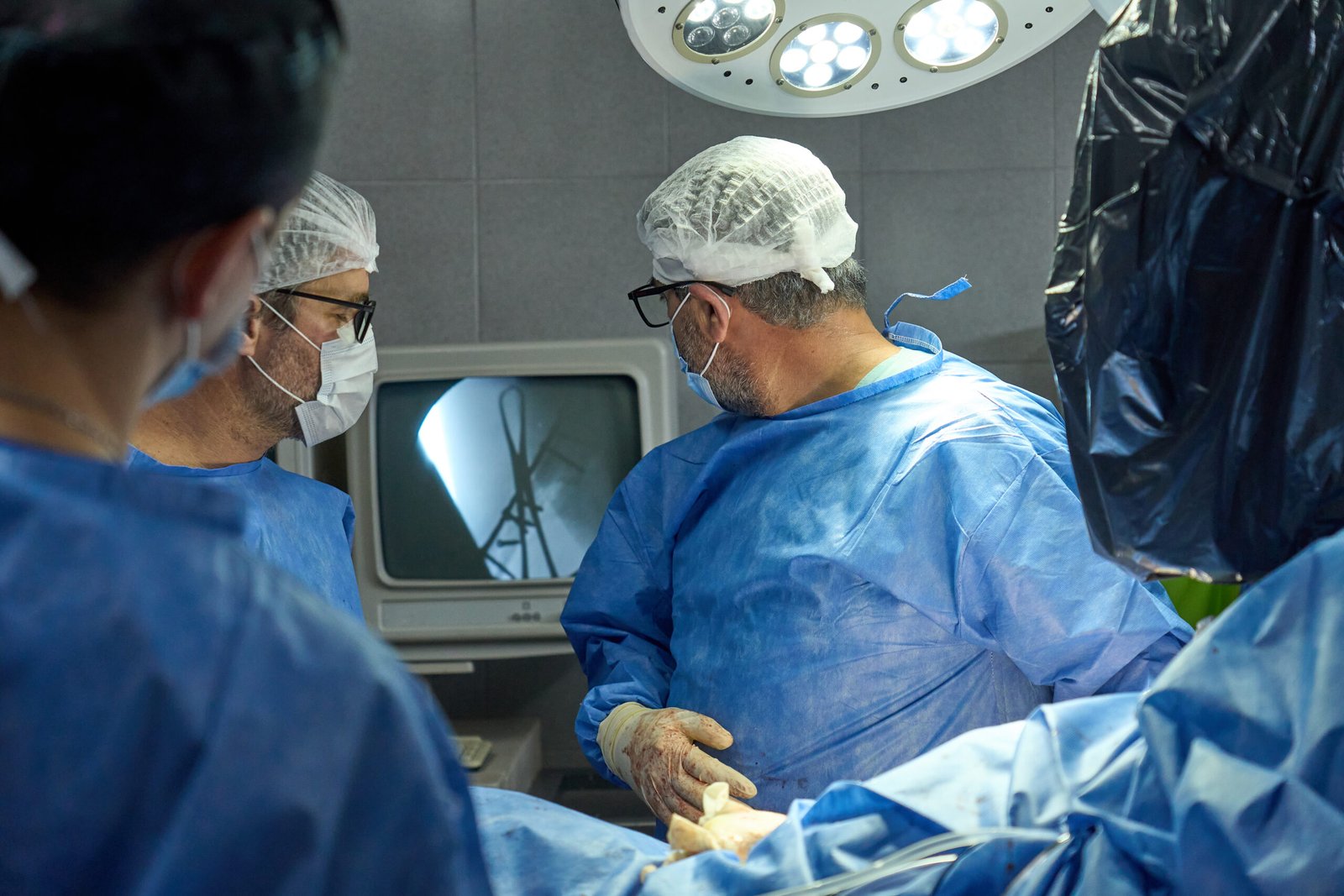
Stapler surgery for piles is a surgical procedure used mainly to treat prolapsing internal hemorrhoids. Its medical name is stapled hemorrhoidopexy.
Unlike conventional hemorrhoidectomy, the procedure does not simply cut out the hemorrhoids. A circular stapling device removes a ring of excess tissue higher inside the anal canal and lifts the prolapsing hemorrhoidal tissue back toward its normal position. This also reduces blood flow to the hemorrhoidal tissue, helping it shrink.
Stapler surgery may be considered for selected patients depending on the grade and type of hemorrhoids, symptoms, degree of prolapse and other individual factors.
In this guide, we explain how stapler surgery works, who may be suitable, its benefits and risks, recovery, recurrence and how it compares with other piles treatments.
What Is Stapler Surgery for Piles?
Stapler surgery, also called stapled hemorrhoidopexy, is a procedure that lifts prolapsing internal hemorrhoidal tissue back into the anal canal.
During the procedure, a specially designed circular stapling device is used inside the anal canal.
The device removes a circular ring of excess mucosal tissue above the hemorrhoids. This helps pull the prolapsing hemorrhoidal tissue upward and reduces its blood supply.
The hemorrhoidal tissue itself is therefore not simply cut out in the same way as a conventional hemorrhoidectomy.
Stapled Hemorrhoidopexy vs Stapled Hemorrhoidectomy
You may hear the procedure called “stapled hemorrhoidectomy.”
However, stapled hemorrhoidopexy is a more accurate medical term because the main purpose is to reposition the prolapsing hemorrhoidal tissue rather than completely remove the hemorrhoids.
The procedure uses a circular stapling device to remove a ring of mucosa from the upper anal canal and lift the hemorrhoidal cushions back into position.
Who Is a Good Candidate for Stapler Surgery?
Stapler surgery may be considered for selected patients with symptomatic internal hemorrhoids, particularly when there is significant prolapse.
It may be considered when:
- Internal hemorrhoids are causing persistent symptoms.
- The hemorrhoids are prolapsing.
- Symptoms have not improved adequately with appropriate non-surgical treatment.
- The hemorrhoid anatomy is suitable for the procedure.
- The expected benefits and risks are acceptable for the individual patient.
The grade of hemorrhoids is also important.
However, grade alone does not determine whether stapler surgery is appropriate. A surgeon will also consider the type of hemorrhoids, symptoms, external components and other clinical findings.
Current ASCRS guidance notes that office-based treatments can effectively treat many grade I and II hemorrhoids and selected grade III cases, while surgical treatment is considered for selected patients with more advanced or persistent disease.
Is Stapler Surgery Suitable for External Piles?
Usually, stapled hemorrhoidopexy does not treat external hemorrhoids directly.
The procedure is designed primarily for internal hemorrhoids with prolapse.
If you have large external hemorrhoids or combined internal and external hemorrhoids, another surgical approach may be more appropriate.
The ASCRS guideline specifically notes that stapled hemorrhoidopexy does not address the external component of hemorrhoidal disease.
This is why it is important to know whether your piles are internal, external or combined before deciding on a procedure.
What Are the Grades of Piles?
Doctors commonly classify internal hemorrhoids into four grades based mainly on whether they prolapse, or come down from inside the anal canal.
Knowing the grade can help explain the severity of prolapse. However, the grade alone does not decide which treatment is best.
| Grade | What happens |
|---|---|
| Grade I | Internal hemorrhoids without prolapse |
| Grade II | Prolapse during straining but return on their own |
| Grade III | Prolapse and need to be pushed back manually |
| Grade IV | Prolapsed and cannot be pushed back |
Grade I Hemorrhoids
Grade I hemorrhoids remain inside the anal canal.
They do not normally prolapse outside the anus. Bleeding can occur, but there may be no visible lump.
Many Grade I hemorrhoids can be managed with dietary changes, avoiding straining and other non-surgical treatments.
Grade II Hemorrhoids
Grade II hemorrhoids may come down during bowel movements or straining.
They usually return inside on their own after the straining stops.
Treatment depends on the severity and persistence of symptoms. Some patients improve with lifestyle measures, while others may benefit from office-based treatments.
Grade III Hemorrhoids
Grade III hemorrhoids prolapse during bowel movements or straining but do not return inside on their own.
They may need to be gently pushed back manually.
If symptoms continue despite appropriate non-surgical treatment, surgical options may be discussed. The most suitable procedure depends on the patient’s individual condition.
Grade IV Hemorrhoids
Grade IV hemorrhoids remain prolapsed and cannot be pushed back inside.
They may cause significant discomfort, irritation, bleeding or difficulty with hygiene.
Because Grade IV hemorrhoids are permanently prolapsed, they often require surgical assessment. The appropriate procedure depends on whether the disease is internal, external or combined and on other clinical findings.
Remember: The grade is only one part of deciding treatment. A surgeon also considers symptoms, examination findings, external hemorrhoids, previous treatment and the patient’s overall situation.
When Is Stapler Surgery for Piles Recommended?
Stapler surgery may be considered for selected patients with symptomatic prolapsing internal hemorrhoids.
It is not automatically recommended simply because a person has a particular grade of piles.
A surgeon may consider stapled hemorrhoidopexy when:
- Internal hemorrhoids are significantly prolapsing.
- Symptoms continue despite appropriate non-surgical treatment.
- The hemorrhoid type and anatomy are suitable for the procedure.
- The patient has symptoms that are affecting daily life.
- The potential benefits of the procedure outweigh its risks and possibility of recurrence.
Stapled hemorrhoidopexy is mainly designed for internal hemorrhoids with prolapse. It does not directly remove the external component of hemorrhoidal disease.
Current clinical guidance also emphasizes that treatment should be individualized rather than based on hemorrhoid grade alone.
Does Everyone With Grade III Piles Need Stapler Surgery?
No.
Having Grade III piles does not automatically mean that stapler surgery is the right choice.
Some patients may benefit from other treatments, including office-based procedures or conventional hemorrhoidectomy, depending on their symptoms and examination findings.
Your surgeon will consider the grade, prolapse, internal or external component, symptoms, previous treatments and overall health before recommending a procedure.
How Is Stapler Surgery for Piles Performed?
Stapled hemorrhoidopexy is performed using a specially designed circular stapling device.
The procedure generally involves several steps.
Step 1: Anaesthesia
The procedure is performed under appropriate anaesthesia so that you remain comfortable during surgery.
The type of anaesthesia depends on the procedure and the patient’s individual circumstances.
Step 2: Examination of the Anal Canal
The surgeon examines the anal canal and hemorrhoidal tissue before starting the stapling procedure.
This helps confirm the prolapse and plan the procedure.
Step 3: Placement of the Stapling Device
A specially designed circular stapling device is positioned inside the anal canal.
The device is placed above the main area of prolapsing hemorrhoidal tissue.
Step 4: Removal of a Circular Ring of Mucosa
The stapler removes a circular ring of excess mucosal tissue from the upper part of the anal canal.
This helps reduce the amount of prolapsing tissue.
Step 5: Lifting the Prolapsed Hemorrhoidal Tissue
Removing this ring causes the prolapsing hemorrhoidal tissue to be pulled upward toward its normal position.
This is why the procedure is called hemorrhoidopexy.
Step 6: Creating the Staple Line
The stapler creates a circular line of small staples.
This helps secure the repositioned tissue and also reduces blood flow to the hemorrhoidal cushions.
Step 7: Final Inspection
The surgeon checks the staple line and surrounding area before completing the procedure.
The patient is then moved to recovery and monitored after anaesthesia.
Is Stapler Surgery for Piles Painful?
Stapler surgery is generally associated with less early postoperative pain than conventional excisional hemorrhoidectomy, but it is not completely pain-free.
One reason is that the stapling is performed higher inside the anal canal rather than removing hemorrhoidal tissue from the more sensitive skin around the anus.
Patients can still experience discomfort, pressure, an urge to pass stool or other symptoms during the early recovery period.
Pain and recovery can vary from person to person.
Clinical studies have found that stapled hemorrhoidopexy can result in less early postoperative pain and faster initial recovery compared with conventional hemorrhoidectomy. However, this benefit needs to be considered alongside the higher risk of hemorrhoid recurrence associated with stapled hemorrhoidopexy.
What Are the Benefits of Stapler Surgery for Piles?
For appropriately selected patients, stapled hemorrhoidopexy may offer several advantages.
Possible benefits include:
- Less early postoperative pain compared with conventional hemorrhoidectomy
- Faster initial recovery in many patients
- No large external surgical wound in the same way as excisional hemorrhoidectomy
- Repositioning of prolapsing internal hemorrhoidal tissue
- May allow an earlier return to normal activities in selected patients
However, these benefits do not mean that stapler surgery is the best option for everyone.
The procedure has its own risks and a higher long-term recurrence rate than conventional hemorrhoidectomy in available comparative evidence. This is why the choice of treatment should be made after proper examination and discussion with a surgeon.
What Stapler Surgery Does Not Mean
Stapler surgery should not be described as:
“Painless piles surgery”
“A 100% permanent cure”
“Piles can never come back after stapler surgery”
A more accurate statement is: Stapled hemorrhoidopexy can provide less painful early recovery for selected patients, but recurrence is possible and the procedure is not suitable for every type of hemorrhoid.
What Are the Risks and Disadvantages of Stapler Surgery?
Stapler surgery can offer less pain and a faster early recovery for selected patients. However, it also has potential risks and disadvantages that should be discussed before deciding on the procedure.
Understanding both the benefits and limitations helps you make a more informed treatment decision.
Bleeding
Bleeding can occur after stapled hemorrhoidopexy.
Small amounts of bleeding may occur during the recovery period, but heavy or persistent bleeding needs medical assessment.
Pain or Discomfort
Stapler surgery is generally less painful in the early recovery period than conventional hemorrhoidectomy.
However, it is not completely pain-free. Some patients may experience discomfort, pressure or pain after the procedure.
Urgency or Tenesmus
Some patients may feel an increased urge to pass stool or a sensation that they need to have a bowel movement even when the rectum is empty.
This sensation is sometimes called tenesmus.
It may improve as the tissues heal, but persistent symptoms should be discussed with the treating surgeon.
Infection
As with any surgical procedure, infection is possible.
Following your surgeon’s postoperative instructions and attending recommended follow-up appointments can help identify complications early.
Difficulty Passing Urine
Some patients may temporarily have difficulty passing urine after hemorrhoid surgery.
This can be related to factors such as anaesthesia, pain or swelling.
If you are unable to pass urine, you should contact your healthcare provider promptly.
Rare but Serious Complications
Serious complications are uncommon, but they can occur.
The possible complications depend on the individual patient and the procedure. Severe bleeding, infection, significant pain or other unusual symptoms require prompt medical evaluation.
Your surgeon should explain the relevant risks before surgery.
Recurrence of Hemorrhoids
Recurrence is one of the important disadvantages of stapled hemorrhoidopexy.
The procedure can reposition prolapsing internal hemorrhoidal tissue, but it does not guarantee that hemorrhoids will never return.
Comparative evidence has found a higher long-term recurrence rate after stapled hemorrhoidopexy than after conventional excisional hemorrhoidectomy.
Persistent or Recurrent Prolapse
Some patients may continue to have, or later develop, prolapse after stapler surgery.
This is another reason why the procedure should be selected carefully.
The surgeon needs to consider the extent of prolapse, the presence of external hemorrhoids and the patient’s individual anatomy before recommending stapled hemorrhoidopexy.
What Is the Main Disadvantage of Stapler Surgery?
The main consideration is that the procedure may provide better early recovery but a higher risk of recurrence compared with conventional excisional hemorrhoidectomy.
This is why current ASCRS guidance does not recommend stapled hemorrhoidopexy routinely as a first-line surgical treatment for internal hemorrhoids. It may still have a role in carefully selected patients.
Can Piles Come Back After Stapler Surgery?
Yes. Piles can come back after stapler surgery.
Stapled hemorrhoidopexy can reposition prolapsing internal hemorrhoidal tissue, but it does not guarantee that hemorrhoids will never recur.
Recurrence is an important factor to consider when comparing stapler surgery with other surgical treatments.
Studies summarized in the ASCRS guideline have found that recurrence is more common after stapled hemorrhoidopexy than after conventional excisional hemorrhoidectomy.
Why Can Piles Come Back?
Hemorrhoids can recur for several reasons.
Factors that may contribute to recurrent symptoms include:
- Chronic constipation
- Straining during bowel movements
- Spending a long time on the toilet
- Persistent bowel habit problems
- Progression of hemorrhoidal disease
This does not mean that recurrence is always caused by lifestyle.
The underlying hemorrhoidal disease and individual patient factors also matter.
What Can You Do After Stapler Surgery?
Following your surgeon’s advice can help support recovery and healthy bowel habits.
This may include:
- Eating enough fibre
- Drinking adequate fluids
- Avoiding unnecessary straining
- Keeping bowel movements regular
- Following prescribed medicines
- Attending follow-up appointments
If bleeding, prolapse, pain or other symptoms return, speak with your surgeon rather than assuming that the symptoms will resolve on their own.
Stapler Surgery vs Traditional Piles Surgery
Stapled hemorrhoidopexy and conventional hemorrhoidectomy are different surgical approaches.
Neither procedure is automatically the best choice for every patient.
| Feature | Stapler Surgery | Conventional Hemorrhoidectomy |
|---|---|---|
| Main approach | Repositions prolapsing internal tissue | Removes hemorrhoidal tissue |
| External hemorrhoids | Does not directly address them | Can address external hemorrhoidal disease |
| Early pain | Generally lower | Usually higher |
| Early recovery | Often faster | Usually more uncomfortable initially |
| Long-term recurrence | Can be higher | Generally lower |
| Suitable for everyone? | No | No |
How Are the Procedures Different?
Stapler surgery mainly lifts and repositions prolapsing internal hemorrhoidal tissue.
Conventional hemorrhoidectomy removes the hemorrhoidal tissue itself.
Because the procedures work differently, the choice depends on the type of hemorrhoids, severity of symptoms, prolapse, external disease and other patient factors.
Evidence shows that stapled hemorrhoidopexy can provide less early postoperative pain and faster initial recovery, while conventional hemorrhoidectomy generally has a lower risk of long-term recurrence.
Which One Is Better?
There is no single procedure that is better for every patient.
The right choice depends on your hemorrhoid type, grade, symptoms, external component, previous treatments and individual circumstances.
Your surgeon should explain the expected benefits, risks and possibility of recurrence before you decide.
Stapler Surgery vs Other Treatments for Piles
Stapler surgery is only one of several treatment options for hemorrhoids.
The appropriate treatment depends on factors such as the grade of hemorrhoids, symptoms, whether they are internal or external, the degree of prolapse and previous treatment.
Medicines and Lifestyle Changes
Mild hemorrhoidal symptoms can often be managed with measures that improve bowel habits.
These may include:
- Increasing dietary fibre
- Drinking adequate fluids
- Avoiding straining
- Limiting prolonged sitting on the toilet
- Using medicines recommended by your doctor
These measures are particularly important when constipation or straining contributes to symptoms.
Rubber Band Ligation
Rubber band ligation is an office-based treatment mainly used for suitable internal hemorrhoids.
A small rubber band is placed around the base of the hemorrhoidal tissue.
The band cuts off its blood supply, causing the tissue to shrink and eventually fall away.
It is commonly used for appropriate Grade I, Grade II and selected Grade III internal hemorrhoids.
Hemorrhoidal Artery Ligation
Hemorrhoidal artery ligation uses Doppler guidance to identify and tie off arteries supplying the hemorrhoidal tissue.
It may be considered for selected patients with internal hemorrhoids, particularly when bleeding and prolapse are important symptoms.
The appropriate procedure depends on the patient’s condition and surgeon’s assessment.
Conventional Hemorrhoidectomy
Conventional hemorrhoidectomy involves surgically removing hemorrhoidal tissue.
It may be recommended for patients with more advanced hemorrhoids, significant external disease or symptoms that are not adequately controlled with less invasive treatments.
It generally causes more postoperative pain than stapled hemorrhoidopexy but has a lower recurrence risk.
Stapled Hemorrhoidopexy
Stapled hemorrhoidopexy uses a circular stapling device to reposition prolapsing internal hemorrhoidal tissue.
It can offer less early postoperative pain and faster initial recovery for selected patients.
However, recurrence can be higher than with conventional hemorrhoidectomy, and the procedure does not directly treat external hemorrhoids.
Which Piles Treatment Is Right for You?
There is no single treatment that works best for everyone.
Your surgeon may consider:
Grade → Internal or external → Prolapse → Symptoms → Previous treatment → Overall health → Patient preference
The goal is to choose a treatment that addresses your specific type of hemorrhoidal disease while balancing effectiveness, recovery, risks and the possibility of recurrence.
What Is Recovery Like After Stapler Surgery?
Recovery after stapler surgery for piles is usually easier in the early period than after conventional hemorrhoidectomy, but recovery varies from person to person.
Your surgeon will give you specific instructions based on the procedure, your health and how you are recovering.
First Few Days
You may have some discomfort, pressure or an urge to pass stool during the first few days.
Your first bowel movement may also cause some concern. Keeping stools soft and avoiding straining can make this period more comfortable.
Take your prescribed pain medicines and any stool-softening medicines as directed by your surgeon.
Gentle movement is usually encouraged after surgery, while strenuous activity should be avoided until your surgeon says it is safe.
First 1–2 Weeks
Your symptoms should gradually improve as the area heals.
You can usually increase your normal activities gradually, depending on how you feel and the advice given by your surgical team.
Try to avoid:
- Straining during bowel movements
- Constipation
- Heavy lifting until you are advised that it is safe
- Activities that increase pain or discomfort
Keep following your surgeon’s instructions about medicines, bowel habits and follow-up.
Returning to Work
There is no single recovery time that applies to everyone.
Some people return to normal activities relatively quickly, while others need more time.
Your return to work depends on:
- The procedure you had
- Your recovery
- The type of work you do
- Whether your job involves sitting for long periods
- Whether your work involves lifting or physical activity
A person with a desk-based job may return sooner than someone whose work involves heavy physical activity.
Do not choose a surgery based only on a promised recovery time. Your surgeon can give you a more realistic estimate based on your individual situation.
What Should You Eat After Stapler Surgery?
After piles surgery, one of the most important goals is to have soft, regular bowel movements without straining.
Your doctor may recommend dietary changes and, when appropriate, stool-softening medicines or laxatives during recovery.
Eat More Fibre-Rich Foods
Good sources of fibre include:
- Fruits
- Vegetables
- Whole grains
- Oats
- Beans and lentils
- Nuts and seeds
Increase fibre gradually if your usual diet is low in fibre, as a sudden increase can cause bloating or discomfort.
Drink Enough Fluids
Adequate fluid intake helps fibre work effectively and can help keep stools soft.
Unless your doctor has advised you to restrict fluids for another medical reason, drink enough water and other fluids throughout the day.
Try to Avoid Constipation and Straining
Constipation can make bowel movements more difficult after surgery.
Try not to sit on the toilet for a long time or repeatedly strain to pass stool.
If your surgeon has prescribed a stool softener or laxative, take it according to their instructions.
What Foods Should You Avoid?
There is no single list of foods that everyone must avoid after stapler surgery.
Instead, notice which foods personally cause constipation, diarrhoea, bloating or other bowel symptoms and discuss persistent problems with your doctor.
The main goal is simple: Keep your stools soft and regular, and avoid straining.
When Should You Contact a Doctor After Stapler Surgery?
Some discomfort and minor symptoms can occur during recovery.
However, certain symptoms should not be ignored.
Contact your surgeon or seek medical attention if you experience:
- Heavy or persistent bleeding
- Severe or worsening pain
- Fever
- Difficulty passing urine
- Increasing swelling
- Fainting, dizziness or unusual weakness
- Rapidly worsening symptoms
- Any other symptom that concerns you after surgery
Heavy bleeding or severe pain requires prompt assessment. Difficulty passing urine can also occur after anorectal surgery and should be addressed if you are unable to urinate.
If you are unsure whether a symptom is part of normal recovery, contact your surgical team rather than waiting for it to become worse.
Is Stapler Surgery Better Than Laser Treatment for Piles?
Not necessarily. Stapler surgery and laser procedures are different treatments, and neither is automatically the best option for every patient.
Stapled hemorrhoidopexy uses a circular stapling device to reposition prolapsing internal hemorrhoidal tissue.
Laser procedures use laser energy in different ways depending on the technique and the type of hemorrhoidal disease being treated.
The right treatment depends on factors such as:
- Hemorrhoid grade
- Internal or external disease
- Degree of prolapse
- Symptoms
- Previous treatment
- Overall health
- Patient preferences
- Surgeon’s assessment
It is also important to understand what specific “laser treatment” is being offered, because different laser techniques are not necessarily the same procedure.
Instead of choosing a procedure because it sounds newer or less invasive, discuss the expected benefits, risks, recurrence and recovery with a qualified surgeon.
Is Stapler Surgery for Piles Safe?
Stapler surgery can be an appropriate treatment for selected patients, but like every surgical procedure, it has potential risks and recurrence is possible.
The safety of the procedure depends partly on selecting the right patients and using the appropriate surgical technique.
Before recommending stapler surgery, a surgeon should assess:
- The type and grade of hemorrhoids
- Internal versus external disease
- Degree of prolapse
- Symptoms
- Previous treatments
- Overall health
- Whether the expected benefits outweigh the risks
Stapled hemorrhoidopexy can provide less early postoperative pain and faster initial recovery than conventional hemorrhoidectomy, but it also has a higher risk of recurrent hemorrhoids and prolapse. Current ASCRS guidance therefore does not recommend it routinely as a first-line surgical treatment for internal hemorrhoids.
Safe treatment does not mean risk-free treatment. Your surgeon should explain the benefits, limitations and alternatives before you make a decision.
A General Surgeon’s Perspective: When Stapler Surgery May Be Appropriate
Expert Perspective by Prof. Dr. R. K. Mishra
Director & Chief Surgeon, World Laparoscopy Hospital
“When evaluating a patient with piles, I do not decide on the procedure simply because the patient wants stapler surgery. I first need to understand the type and grade of hemorrhoids, the degree of prolapse and the symptoms the patient is experiencing.”
A patient may have significant internal prolapse but little external disease. Another patient may have both internal and external hemorrhoids.
These two patients may not benefit from the same surgical approach.
I also consider whether previous non-surgical treatments have helped, how much the symptoms are affecting the patient’s daily life and what the patient expects from treatment.
Stapler surgery can be useful for selected patients with prolapsing internal hemorrhoids. However, recurrence is an important consideration, and it is not the right procedure for every patient.
The goal should always be to choose the most appropriate treatment for the individual patient, rather than choosing a procedure simply because it is considered minimally invasive or popular.
This expert perspective should be reviewed and approved by Prof. Dr. R. K. Mishra before publication if presented as his direct quotation.
Stapler Surgery for Piles: Is It Right for You?
Choosing a piles treatment should start with a proper diagnosis.
A simple way to understand the decision is:
Symptoms → Examination → Hemorrhoid Grade → Internal/External → Prolapse → Previous Treatment → Patient Factors → Procedure Choice
Persistent Bleeding or Prolapse
→ Get evaluated by a qualified surgeon.
Persistent symptoms may require more than home treatment.
Mild Symptoms
→ Conservative measures or office-based treatments may be appropriate.
Dietary fibre, adequate fluids and avoiding straining are important parts of managing hemorrhoidal symptoms. Other treatments may be considered depending on the condition.
Significant Prolapsing Internal Hemorrhoids
→ Surgical options may be discussed.
Stapled hemorrhoidopexy may be considered in selected patients, but other procedures may also be appropriate.
External or Combined Hemorrhoids
→ Another procedure may be more appropriate.
Stapled hemorrhoidopexy does not directly address the external component of hemorrhoidal disease.
The right piles treatment is not determined by the procedure’s popularity. It is determined by the patient’s condition.
Conclusion
Stapler surgery, or stapled hemorrhoidopexy, is one surgical option for selected patients with prolapsing internal hemorrhoids.
It can offer less early postoperative pain and faster initial recovery than conventional hemorrhoidectomy for many patients. However, it is not suitable for everyone and does not directly treat external hemorrhoids.
Recurrence is an important consideration, as hemorrhoids and prolapse are more likely to return after stapled hemorrhoidopexy than after conventional excisional hemorrhoidectomy.
The best treatment depends on the type and grade of piles, symptoms, degree of prolapse, external disease, previous treatment and individual patient factors.
If you have persistent bleeding, prolapse, pain or recurrent piles, a consultation with a qualified surgeon can help determine which treatment is appropriate for you.
Considering Treatment for Piles?
Prof. Dr. R. K. Mishra, Director & Chief Surgeon at World Laparoscopy Hospital, has more than 30 years of experience in laparoscopic, robotic and minimal access surgery.
A consultation can help evaluate your symptoms and hemorrhoid condition and discuss whether stapler surgery or another treatment is suitable for you.
Book a General Surgery Consultation at World Laparoscopy Hospital
Frequently Asked Questions About Stapler Surgery for Piles
What is stapler surgery for piles?
Stapler surgery for piles is a procedure called stapled hemorrhoidopexy.
It uses a circular stapling device to remove a ring of excess tissue and reposition prolapsing internal hemorrhoidal tissue higher inside the anal canal. It is mainly used for selected patients with prolapsing internal hemorrhoids.
Is stapler surgery for piles painful?
Stapler surgery is generally associated with less early postoperative pain than conventional hemorrhoidectomy, but it is not completely pain-free.
Some patients may experience discomfort, pressure or an urge to pass stool during the early recovery period. Pain and recovery vary from person to person.
Who is eligible for stapler surgery for piles?
Stapler surgery may be considered for selected patients with symptomatic, prolapsing internal hemorrhoids.
A surgeon will consider the hemorrhoid grade, degree of prolapse, symptoms, internal or external disease, previous treatments and overall health before recommending the procedure.
Which grade of piles can be treated with stapler surgery?
Stapled hemorrhoidopexy is mainly used for prolapsing internal hemorrhoids, which can include selected Grade III cases and some other patients depending on their condition.
Hemorrhoid grade alone does not determine whether stapler surgery is appropriate.
The surgeon also needs to assess the type of hemorrhoids, external component, symptoms and degree of prolapse.
Is stapler surgery better than traditional piles surgery?
Not for everyone.
Stapler surgery may provide less early postoperative pain and faster initial recovery than conventional hemorrhoidectomy.
However, conventional hemorrhoidectomy generally has a lower long-term recurrence risk. The best procedure depends on the type and severity of hemorrhoids and the individual patient.
Can piles come back after stapler surgery?
Yes. Piles can come back after stapler surgery.
Recurrence is an important limitation of stapled hemorrhoidopexy. Studies summarized in the ASCRS guideline have found higher recurrence after stapled hemorrhoidopexy compared with conventional excisional hemorrhoidectomy.
How long does stapler surgery for piles take?
The procedure itself is generally relatively short, but the exact operating time varies depending on the patient’s condition and surgical circumstances.
Your surgeon can give you a more accurate estimate after evaluating your hemorrhoids and planned procedure.
How long does it take to recover from stapler surgery?
Early recovery is often faster than after conventional hemorrhoidectomy, but the exact recovery time varies.
Your return to work and normal activities depends on your symptoms, type of work, physical activity and how your body heals.
Follow your surgeon’s specific instructions rather than relying on a fixed recovery time.
Can I pass stool after stapler surgery?
Yes, you will be able to pass stool after stapler surgery.
Your first bowel movement may feel uncomfortable or create an urge to pass stool.
Keeping stools soft, drinking adequate fluids, eating enough fibre and avoiding straining can make bowel movements easier during recovery.
Your surgeon may also recommend a stool softener or other medication when appropriate.
What are the risks of stapler surgery for piles?
Possible risks include:
- Bleeding
- Pain or discomfort
- Urgency or tenesmus
- Difficulty passing urine
- Infection
- Persistent or recurrent prolapse
- Recurrence of hemorrhoids
- Rare but serious complications
Your surgeon should explain the potential benefits and risks before the procedure.
Is stapler surgery better than laser treatment for piles?
Neither treatment is automatically better for every patient.
Stapled hemorrhoidopexy and laser procedures are different techniques, and “laser treatment” can refer to different procedures.
The appropriate treatment depends on the hemorrhoid grade, internal or external disease, prolapse, symptoms, previous treatment and the surgeon’s assessment.
Can external piles be treated with stapler surgery?
Stapled hemorrhoidopexy does not directly treat external hemorrhoids.
The procedure is designed mainly to reposition prolapsing internal hemorrhoidal tissue.
If you have external or combined internal and external hemorrhoids, your surgeon may recommend another treatment approach.
Is stapler surgery for piles safe?
Stapler surgery can be an appropriate treatment for selected patients, but it is not risk-free.
Proper patient selection, accurate diagnosis, appropriate surgical technique and postoperative follow-up are important.
Recurrence is also an important consideration when choosing stapled hemorrhoidopexy.